
Why Are Korean Mung Bean Sprouts Named After a Scholar? A Culture Train Adventure to 1400s Korea

 Apple Podcasts
 Spotify
 Castro
 RSS Feed
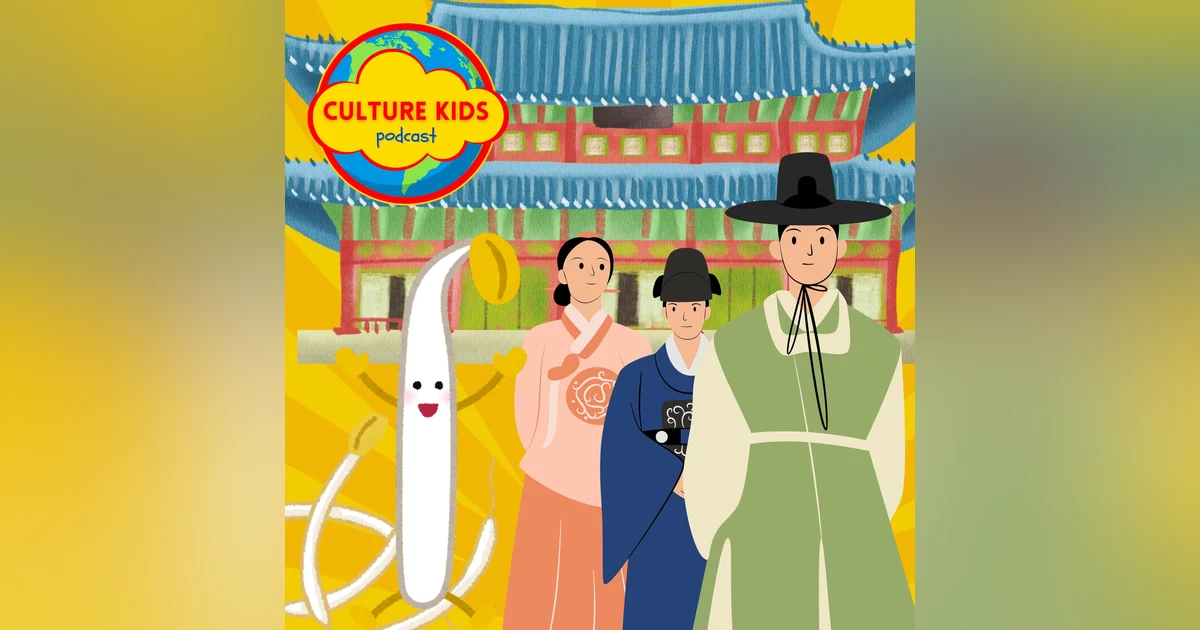
 Grab your imaginary passports, Culture Kids! In this episode, Kristen and Asher welcome their friend Senna into the kitchen to cook up a Korean side dish called sukju namul (숙주나물), better known in English as seasoned mung bean sprouts. But this isn't just a cooking lesson. Halfway through sautéing sprouts with soy sauce and sesame oil, the Culture Train whisks the kids back to 15th century Hanyang (modern-day Seoul) during the Joseon Dynasty, where they uncover the real reason this humble vegetable carries the name of a royal scholar named Shin Suk-ju.
Kids will learn how a political betrayal during a real moment in Korean history became forever linked to a fast-spoiling vegetable, and why Koreans have called mung bean sprouts "sukju namul" for hundreds of years. It's a story about food, memory, loyalty, and how history hides in the meals we eat every day.
- What mung bean sprouts (sukju namul) are and how they're prepared in Korean cooking
- The difference between how mung bean sprouts were cooked in the Joseon Dynasty versus how they're cooked today
- The true story of Korean scholar Shin Suk-ju and the royal succession crisis that changed his legacy
- How a vegetable came to be named after a real historical figure
- A hands-on family recipe families can recreate at home
Sukju Namul (Korean Seasoned Mung Bean Sprouts)
Lightly boiled mung bean sprouts, tossed with sesame oil, garlic, salt, and sesame seeds. Serve as a banchan (Korean side dish) alongside rice.
Hosted by Kristen Kim and Asher, Culture Kids Productions
Host & Producer: Kristen Kim
Co Host & Co Producer: Asher Kim
Guest Host: Senna Turin
Script Review/Academic Consultant: Elisha Li
Nonprofit Consultant: Emil Kang
Audio Engineering: Robin Lai
Music & Sound FX: Envato Elements